
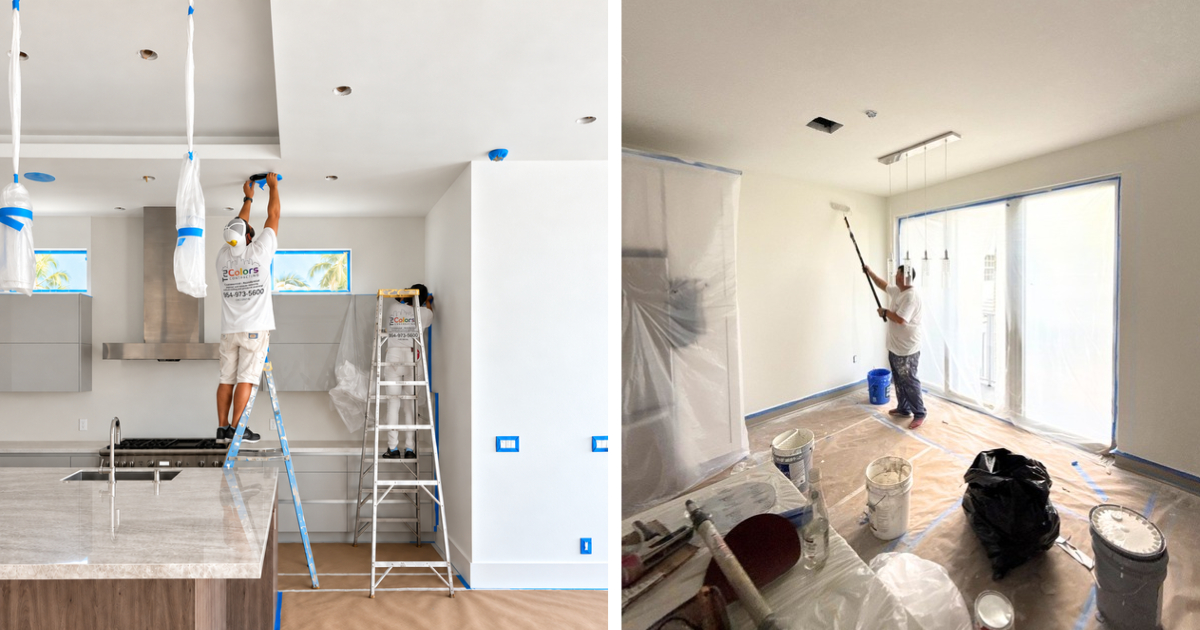
If you’re painting a bedroom in Coral Springs or updating a bathroom in Weston, the practical questions are the same. When can the next coat go on? When can furniture go back? How long should you wait before cleaning the walls? At Tru Colors Contracting, we plan those steps around the coating, the surface, and how well the room stays cool and dry.
How Long Should You Wait Between Coats of Interior Paint?
Start with the recoat time on the label or technical data sheet for the exact paint and finish you’re using. For example, Sherwin-Williams Emerald Interior Latex Satin lists one hour to dry to the touch and four hours before recoating at 77°F and 50% relative humidity. Sherwin-Williams notes that temperature, humidity, and coat thickness can change both times. Sherwin-Williams product data sheet
| Stage | What it means | What to plan for |
|---|---|---|
| Dry to the touch | The surface no longer feels wet. | The wall can look dry while the paint is still too soft for a second coat or contact with furniture. |
| Ready to recoat | The first coat is ready to accept another coat under the product’s specified conditions. | Follow the manufacturer’s recoat instructions and allow more time if the room is damp or the paint remains tacky. |
| Fully cured | The paint has developed its intended hardness and durability. | Follow the product’s care instructions before washing or scrubbing. Benjamin Moore gives about 30 days as general guidance for freshly painted surfaces. |
Check primer and trim paint separately. A wall paint, drywall primer, and cabinet coating can each have a different recoat or cure schedule, even when they’re used in the same room. Benjamin Moore guidance on caring for freshly painted surfaces
Why Does Humidity Slow Interior Paint Drying?
Water evaporates from a fresh coat of latex paint as it dries. When the air already holds a lot of moisture, evaporation can take longer. A bathroom after a hot shower, a kitchen where several pots are simmering, or a closed bedroom that gets little airflow can dry at a different pace than the rest of the house.
The U.S. Environmental Protection Agency recommends keeping indoor relative humidity below 60% where possible, ideally between 30% and 50%, for moisture control. That range is a useful starting point for assessing a room. Follow the paint manufacturer’s application requirements for your specific coating. A small digital hygrometer can tell you what’s happening in the room itself, especially if your thermostat is down the hall. EPA indoor moisture guidance
If a wall shows a recurring water stain, damp patch, or bubbling paint, find and address the moisture source before repainting. Allowing more time between coats helps when the air is humid. An active leak or recurring condensation calls for fixing the underlying problem first.
Should You Run the AC While Interior Paint Dries?
Air conditioning can help control indoor humidity, so aim for a steady room temperature within the paint manufacturer’s recommended range. Check the actual humidity in the work area. A room can feel cool while the air is still damp. ENERGY STAR notes that an oversized room air conditioner can cool the space before it has time to remove much moisture. ENERGY STAR room air conditioner guidance
Follow the paint label’s ventilation instructions as well. Air conditioning helps manage temperature and moisture, while ventilation brings in fresh air and helps clear paint vapors. On a rainy or muggy day, coordinate ventilation and humidity control with your painter so the room gets the airflow the coating requires. EPA healthy indoor painting guidance
What Can You Do Before Painting Day?
- Check the room where the work will happen. Measure temperature and humidity before the project, especially in bathrooms, kitchens, and rooms that tend to stay damp.
- Plan for showers, cooking, and cleaning. Keep steam and other sources of moisture down while paint dries. If a bathroom is being painted, use another shower if one is available and ask your painter when normal use can resume.
- Discuss the rooms you need back first. If you work from home, have guests arriving, or need access to a bedroom, let your painter know up front so the crew can plan the order of work.
- Ask about each painted surface. Walls, baseboards, doors, and cabinets get handled differently. Ask when you can move furniture back, close freshly painted doors, or clean the finish.
Drying time is one part of the schedule. Surface repairs, sanding, cleaning, and priming also affect how long your rooms will be out of use. Read our guide to interior painting preparation
When Can You Move Furniture Back After Painting?
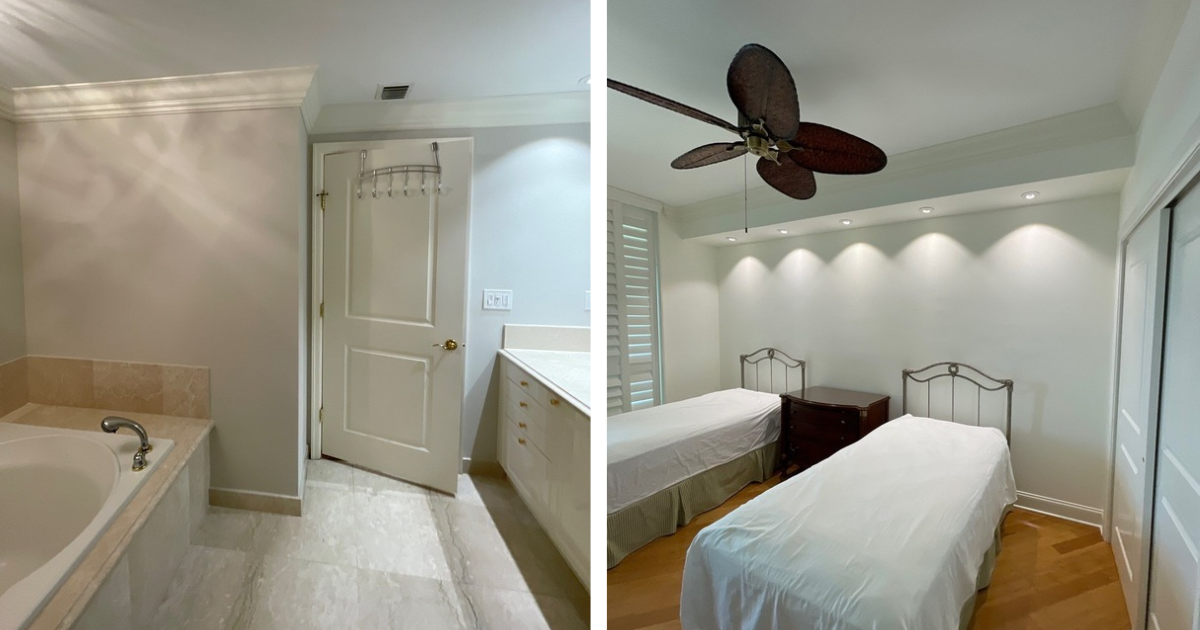
Follow your painter’s guidance for light room use, then leave a gap between furniture and freshly painted walls. A headboard, sofa, or bookcase pressed against a soft finish can leave a mark even if the wall feels dry. Give painted doors and trim particular attention because adjoining surfaces can stick where they make contact. Ask when you can hang artwork, apply adhesive hooks, or wash the walls, since those activities put more stress on a fresh finish.
Frequently Asked Questions
Can you paint indoors when it’s raining in South Florida?
Yes, if the surfaces are dry and you can maintain the temperature, humidity, and ventilation required by the paint. Check conditions in the room before starting and again before recoating.
Why is my interior paint still tacky after several hours?
High humidity, temperatures outside the recommended range, or a coat applied too heavily can slow drying. Give the coat more time and compare room conditions with the product instructions before applying another coat. If tackiness persists under suitable conditions, ask your painter or the paint manufacturer about the specific coating and surface.
How long does interior paint take to fully cure?
Cure time depends on the formula and room conditions. Some interior paints take about 30 days to reach full cure. For painted walls, trim, or cabinets, use the instructions for the exact product to determine when you can clean it or return it to heavy use.
Get a Free Interior Painting Estimate in South Florida
Tru Colors Contracting is a family-owned painting contractor serving South Florida and the Treasure Coast since 2010. We help homeowners in Coral Springs, Parkland, Weston, Pembroke Pines, and surrounding communities plan interior painting projects around the rooms they use every day.
Tell us which spaces you’d like painted and when you need them back. We’ll walk through the preparation, coating options, and expected project timeline, including how humidity may affect the time between coats.
Call 954-973-5600 or request a free interior painting estimate.
