
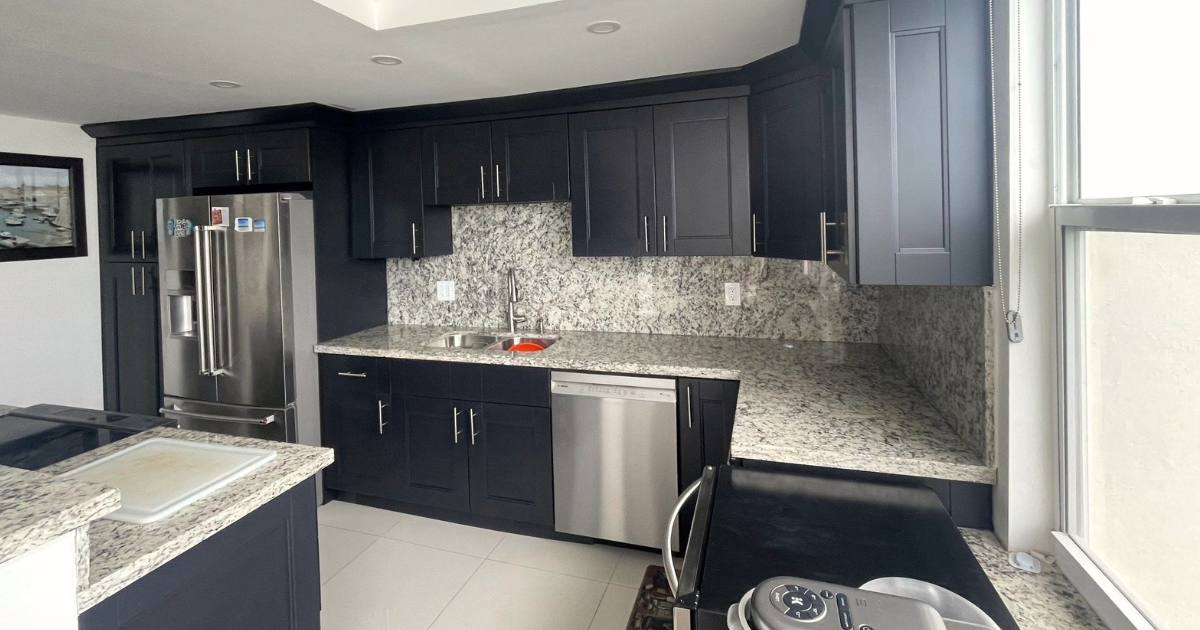
Updating your kitchen does not always require removing the cabinets. When the cabinetry is structurally sound and the layout works, professional cabinet painting can transform the space while preserving the features you already enjoy.
At Tru Colors Contracting, we approach cabinet painting by looking beyond the color. The condition of the cabinets, the existing finish, the preparation required, and the coating system all influence whether painting is the right investment.
For homeowners in Fort Lauderdale, Hollywood, Boca Raton, and throughout South Florida, understanding these details helps you make a more informed decision.
Cabinet painting is generally the better option when you want to update the appearance of sound cabinets without changing your kitchen layout. Replacement makes more sense when the cabinetry has extensive damage or you need different storage, construction, or configuration.
Here is what matters when comparing the two options—and why professional preparation makes such a difference.
Should You Paint or Replace Your Kitchen Cabinets?
The first question is whether your existing cabinets are worth keeping.
Well-built cabinetry can remain functional long after its color or finish no longer suits your home. In these cases, painting allows you to update the kitchen without removing cabinet boxes or starting a larger renovation.
However, applying a new finish to deteriorated cabinets will not correct the underlying problem. An effective recommendation starts with assessing what is there.
When We Recommend Considering Cabinet Painting
Professional cabinet painting can be a practical option when:
- Cabinet boxes are secure and structurally sound.
- Doors and drawer fronts are in serviceable condition.
- Your current layout provides the storage and access you need.
- The main concern is an outdated color, wood tone, or finish.
- Surface damage is limited and can be appropriately repaired.
- You want to retain existing countertops, flooring, and backsplash.
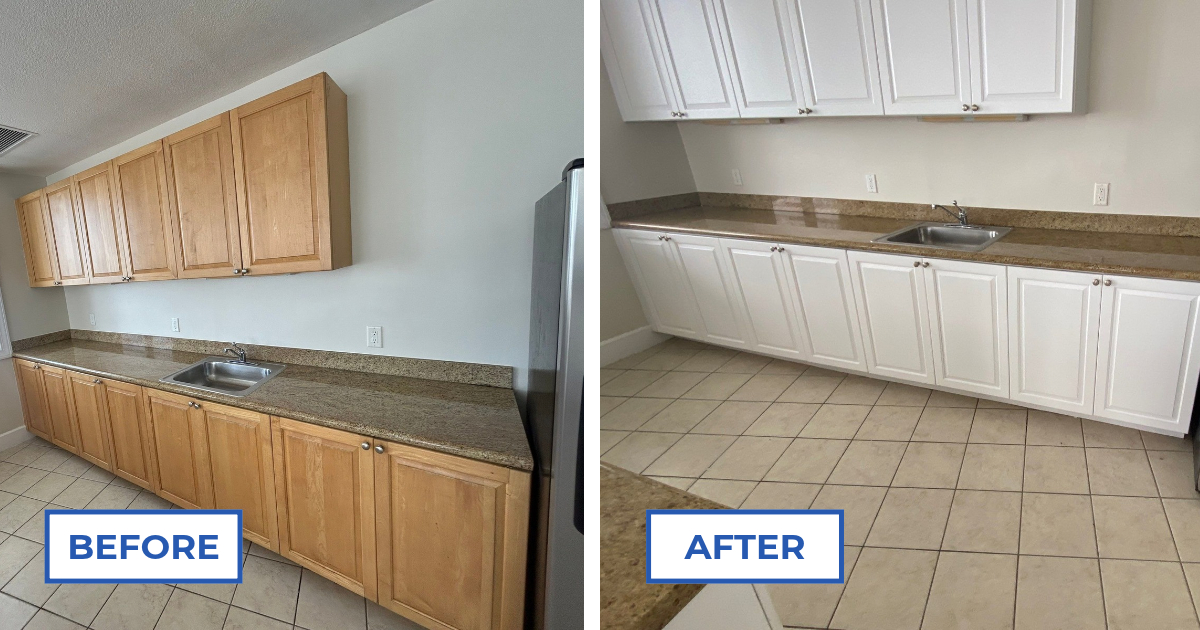
A kitchen with dark stained cabinets, for example, may benefit from a lighter painted finish that complements the existing countertops. The cabinetry stays in place, but the room takes on a different character.
When Replacement May Be the Better Investment
Replacement deserves consideration when cabinets have extensive swelling, deterioration, severe warping, or other damage that makes refinishing impractical.
It may also be the better choice if you want to relocate appliances, change the kitchen footprint, or substantially improve storage.
Our perspective is straightforward: a successful cabinet painting project begins with cabinets that are suitable for painting. Establishing that suitability matters more than choosing a color at the start.
Cabinet Painting vs. Replacement: What Changes?
| Your kitchen’s needs | Cabinet painting | Cabinet replacement |
|---|---|---|
| Update the cabinet color | Changes the finish of existing cabinetry | Introduces new cabinetry and finishes |
| Keep a functional layout | Well suited to this goal | Possible, but involves removal and installation |
| Address minor cosmetic damage | Repairs may be included before painting | Replaces affected components |
| Correct extensive cabinet deterioration | May not be appropriate | Often the more practical option |
| Add storage or change the footprint | Limited to the existing configuration unless separate modifications are planned | Allows a broader redesign |
| Preserve surrounding finishes | Can often retain countertops and backsplash | Removal may affect adjacent materials |
| Manage project cost | Often lower when existing cabinets are suitable | Usually involves a larger overall scope |
Is Cabinet Painting More Affordable Than Replacement?
Professional cabinet painting is often more affordable than replacing otherwise serviceable cabinetry because it retains the existing cabinet boxes and components. Benjamin Moore also identifies repainting as a potentially less expensive alternative to replacement.
However, a meaningful comparison requires more than a price for paint versus a price for new cabinets.
A cabinet painting estimate should account for the work necessary to produce a durable, consistent finish. That can include cleaning, repairs, sanding, priming, finish application, protection, and reinstallation.
Replacement estimates should account for the complete installed project, including any removal, disposal, hardware, and related work affecting countertops, backsplashes, plumbing, or electrical connections.
What Affects Cabinet Painting Cost in South Florida?
The cost of cabinet painting depends on the specific kitchen, including:
- The number of doors and drawer fronts.
- Cabinet size, profiles, and decorative details.
- The condition of the existing coating.
- The amount of cleaning and repair needed.
- Whether grain filling is requested.
- Whether interiors are included.
- Hardware changes and associated hole repairs.
- The selected coating system and application requirements.
At Tru Colors Contracting, the goal is to establish a clear scope so homeowners understand what is being prepared, painted, and finished. Comparing that scope is more useful than comparing prices alone.
Why Cabinet Painting Requires Specialized Preparation
Cabinets are among the most frequently handled painted surfaces in a home. Doors are opened repeatedly, drawer fronts collect fingerprints, and surfaces around the range are exposed to cooking residue.
These conditions make preparation especially important.
A cabinet door can appear clean while still carrying grease or cleaning-product residue. A glossy finish may look sound but require preparation before a new coating can adhere properly. Small surface defects can become more noticeable after a color change.
Professional cabinet painting means recognizing these conditions before applying the finish.
Sherwin-Williams’ cabinet refinishing guidance emphasizes cleaning, surface preparation, primer selection, and careful application as essential parts of the work. The preparation must suit the surface and coating system.
Our Cabinet Painting Process at Tru Colors Contracting
A lasting cabinet finish starts with understanding the surface and preparing it correctly. At Tru Colors Contracting, we tailor the preparation and coating approach to the cabinet material, existing finish, and condition of each kitchen.
1. Evaluate the Cabinet Material and Existing Finish
Our process begins with assessing the cabinetry to determine whether painting is appropriate and what preparation is needed.
Solid wood, wood veneer, MDF, laminate, and thermofoil have different characteristics. Existing stain, clear finishes, and previous paint also influence the recommended approach.
We look for:
- Loose, peeling, or poorly bonded coatings.
- Damage around sinks and dishwashers.
- Deteriorated edges or swollen materials.
- Minor defects that can be repaired.
- Surfaces that may require adhesion or stain-blocking treatment.
This evaluation helps us identify issues that need attention before painting begins.
2. Define What Is Included
Before starting, the Tru Colors team establishes which surfaces will be prepared and painted. Doors, drawer fronts, frames, exposed end panels, trim, and cabinet interiors should all be addressed in the project scope.
This is also the time to discuss new knobs or handles. If the mounting-hole spacing will change, filling and drilling can be planned before the finish is applied.
A clear scope helps homeowners understand what to expect throughout the project.
3. Remove Components and Protect the Kitchen
We remove doors, drawer fronts where appropriate, and hardware to provide access for preparation and coating. Components are organized to support an orderly reinstallation.
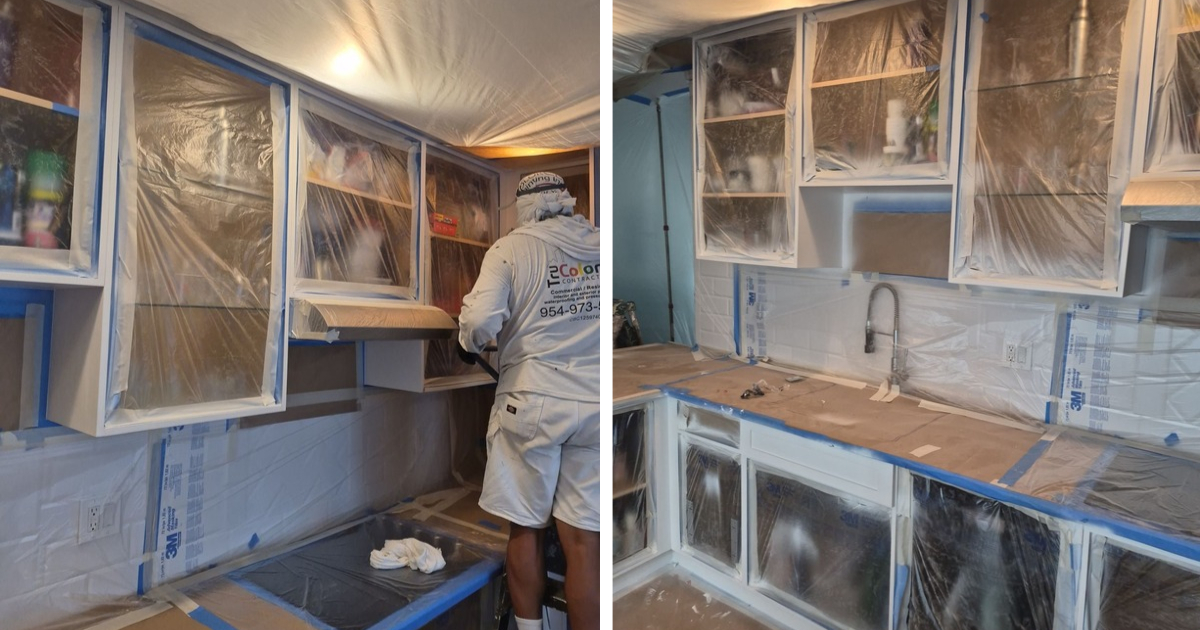
Our team protects countertops, appliances, flooring, backsplashes, and surrounding surfaces before work begins. Work-area protection and ventilation are planned around the application method and selected products.
4. Clean and Degrease Before Sanding
Thorough cleaning is an essential part of our cabinet painting preparation.
Cooking oils, hand residue, and household cleaning products can interfere with adhesion. Areas near the stove, around handles, and along frequently touched edges often require particular attention.
We address these contaminants before sanding, then allow the surfaces to dry before continuing with preparation.
5. Repair and Prepare the Surface
Our team addresses minor dents, scratches, and unwanted hardware holes within the agreed scope. Loose or failing coatings require corrective preparation before a new finish can be applied.
Sanding or deglossing is tailored to the surface and coating system. Care is especially important around detailed profiles, edges, and thin veneers.
We also discuss the expected appearance of the finished cabinets. Open-grain woods such as oak may retain visible texture after painting. If a smoother appearance is desired, additional grain-filling work should be included in the scope.
6. Select a Compatible Primer and Cabinet Coating
Tru Colors Contracting selects the coating approach based on the cabinet material, existing finish, and demands of the project.
Some surfaces require additional adhesion support, while others may need stain-blocking treatment. The primer and finish must be compatible and suitable for cabinetry that experiences frequent handling and cleaning.
This step helps connect the preparation work with the performance expected from the finished surface.
7. Apply the Finish With Attention to Detail
Depending on the project and coating, application may involve spraying, brushing, rolling, or a combination.
Our team pays attention to coverage, consistency, edges, and detailed areas while following the required drying intervals between coats. Surface cleanliness and appropriate application conditions remain important throughout this stage.
The goal is a consistent finish that complements the kitchen and is suited to everyday use.
8. Allow Drying, Reassemble, and Review Aftercare
We allow the appropriate drying time before reassembling components, following the selected coating’s requirements.
Before the project is complete, our team reviews the finished surfaces and explains how to care for the cabinets as the coating continues to cure. This includes guidance on gentle handling and when cleaning can resume.
These final steps help homeowners protect their newly painted cabinets as they return to everyday kitchen use.
What Matters for Cabinet Painting in South Florida?
South Florida cabinet painting projects require attention to the conditions inside the work area.
Temperature, humidity, and ventilation must meet the coating manufacturer’s requirements during application and drying. A conditioned indoor space and an open garage can present very different conditions.
Existing moisture issues also need to be resolved. Cabinets beneath a leaking sink should not simply be painted over, and swollen materials require evaluation before a refinishing recommendation is made.
For homeowners in Hollywood, Fort Lauderdale, Boca Raton, Pompano Beach, and surrounding communities, a careful assessment helps distinguish a cosmetic update from a problem that needs repair or replacement first.
Choosing a Cabinet Color That Works With Your Kitchen
The best cabinet color is one that works with the finishes you plan to keep.
Before selecting a shade, consider your countertops, backsplash, flooring, wall color, lighting, and hardware. These elements affect how a cabinet color looks in the room.
Soft whites and warm neutrals can create a lighter appearance, while muted greens, deeper colors, or a contrasting island can introduce character.
Test colors in the actual kitchen. A shade that looks balanced on a screen or showroom sample may look different beside your stone countertops or under your evening lighting.
Why Choose Tru Colors Contracting for Cabinet Painting?
Tru Colors Contracting is a family-owned South Florida company founded in 2010. Our cabinet painting and refinishing services are part of a broader approach to improving and maintaining residential and commercial properties.
We understand that homeowners need more than a color recommendation. They need guidance on whether their cabinets are suitable for painting, what preparation is necessary, and what the project will include.
Our focus is on evaluating the surfaces, explaining the recommended work, and giving preparation the attention it deserves.
Whether you are updating a kitchen in Hollywood, refreshing cabinetry in Fort Lauderdale, or planning an interior project in Boca Raton, the right starting point is a clear assessment of your existing cabinets.
Frequently Asked Questions About Cabinet Painting in South Florida
Is it better to paint or replace kitchen cabinets?
Painting is often a good choice when cabinets are structurally sound and the layout works. Replacement is more appropriate when cabinets are extensively damaged or you want major changes to storage and configuration.
Can stained wood cabinets be painted?
Often, yes. Sound stained wood cabinets can frequently be painted after suitable cleaning, preparation, and priming. The existing finish and potential stain bleed-through should be evaluated first.
Can you paint laminate cabinets?
Some intact laminate cabinets can be painted with suitable preparation and compatible products. Peeling coverings or damaged underlying materials require further assessment. Thermofoil should be evaluated separately.
How long does professional cabinet painting take?
The schedule depends on the kitchen’s size, cabinet condition, repairs, coating system, and required drying intervals. The estimate should explain the anticipated work schedule and any precautions after reinstallation.
Will cabinet painting hide the wood grain?
Not necessarily. Paint changes the color, but visible grain may remain. Additional grain-filling preparation may be needed if a smoother appearance is the goal.
Does cabinet painting include the inside of the cabinets?
Only when included in the agreed scope. Confirm whether the estimate covers interiors, shelves, door backs, frames, and exposed panels before work begins.
Can I keep my existing countertops and backsplash?
In many cabinet painting projects, yes. Because the cabinet boxes remain in place, surrounding finishes can often be retained and protected during the work.
Find Out Whether Cabinet Painting Is Right for Your Kitchen
You do not need to commit to a full kitchen renovation to explore an update. If your cabinetry is in good condition, professional painting may provide the change you want while preserving the layout and finishes that already work.
Contact Tru Colors Contracting to schedule a cabinet painting estimate and discuss the right approach for your South Florida kitchen.
